
Welcome to Business in Great Waters. I’m Jen Holmgren.
I want to start off my second episode by just saying thank you. Thank you to my family, and my friends, and the people I haven’t met who decided to download and listen to my podcast. I am grateful for each and every one of you, and I can’t wait to bring you more interesting info about Gloucester. I hope you enjoy it.
In this episode, I’ll delve deeper into the founding of the town of Gloucester – not the City, that came in 1873 – some trivia, some minutiae, and a look into more of the building blocks of New England and modern America.
In October of 1641, Messrs. Downing and Hathorne, deputies from Salem, were appointed to assign lots of land after the General Court drew the boundaries of Ipswich, Cape Ann, and Manchester. Residents settled on the name Gloucester, naming it after the ancient seaside city of Gloucester, England.
Here’s a piece of trivia: I mentioned a man by the name of Hathorne. The Hathorne family has a storied past in Danvers and Salem. That’s Hathorne, spelled H-A-T-H-O-R-N-E. Deputy Hathorne was William Hathorne. He was the first of his family on American Soil. For those of you familiar with the Salem witch trials, William was the father of Judge John Hathorne, who presided over many of those trials in what is now Danvers. History has shown Judge Hathorne was an enthusiastic participant in the Salem witch trials, unrepentant for his actions sending so many innocent people to their deaths. Nathaniel Hawthorne, the author of books such as “The Scarlet Letter” and “The House of the Seven Gables,” was a patrilineal descendant of these men. It is possible he added the W to his name to distance himself and his legacy from the heartbreak and hysteria of the Salem witch trials.
In the seventeenth century, land grants were issued to individuals who were determined to be natives of Gloucester, and had reached the age of majority, and who were capable of the rights and duties of citizenship. Important to note: all grantees had English surnames. Most were men; some were women. 82 lots were assigned east of the Cut, and 31 were assigned in West Gloucester and Magnolia.
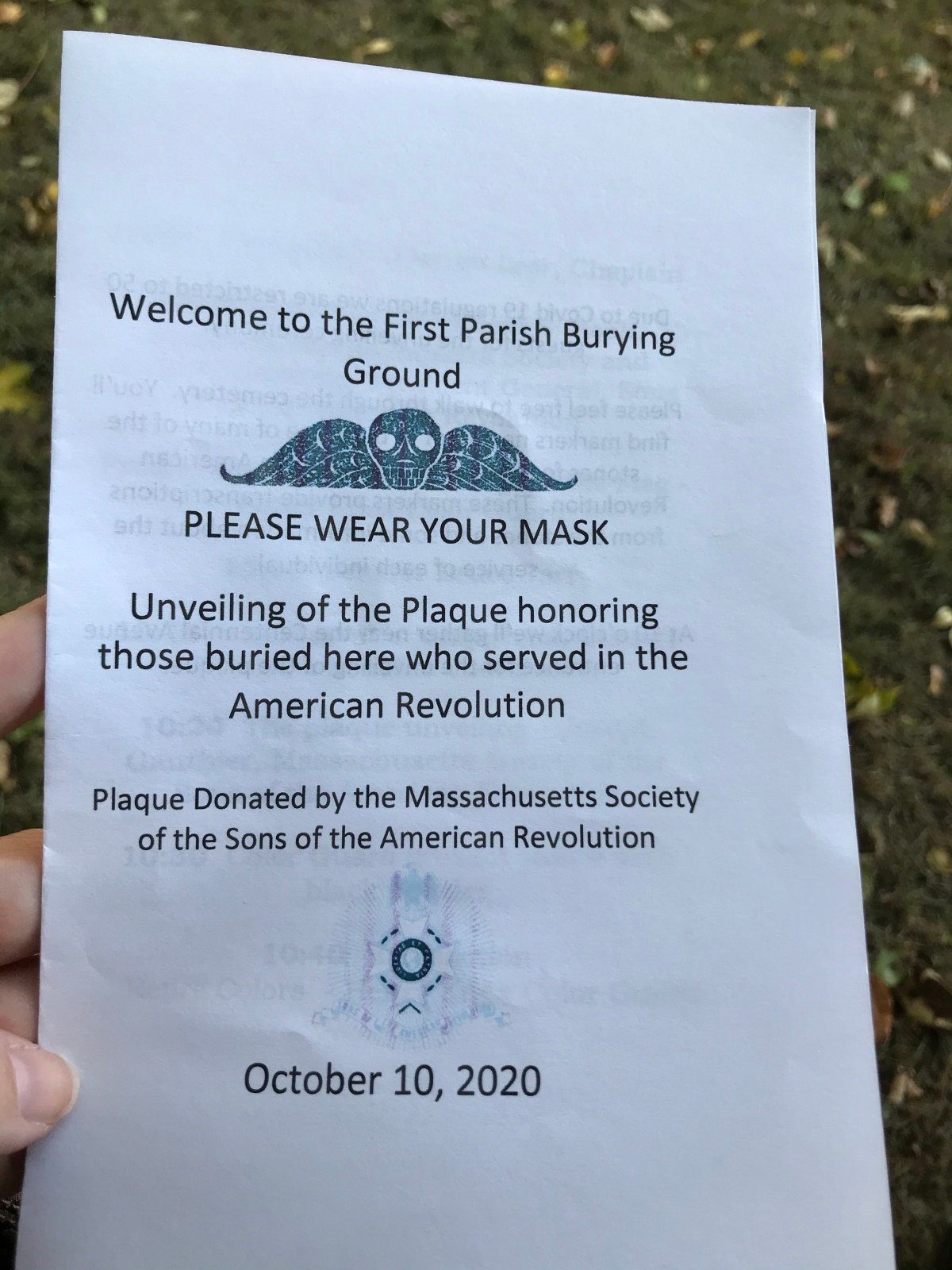
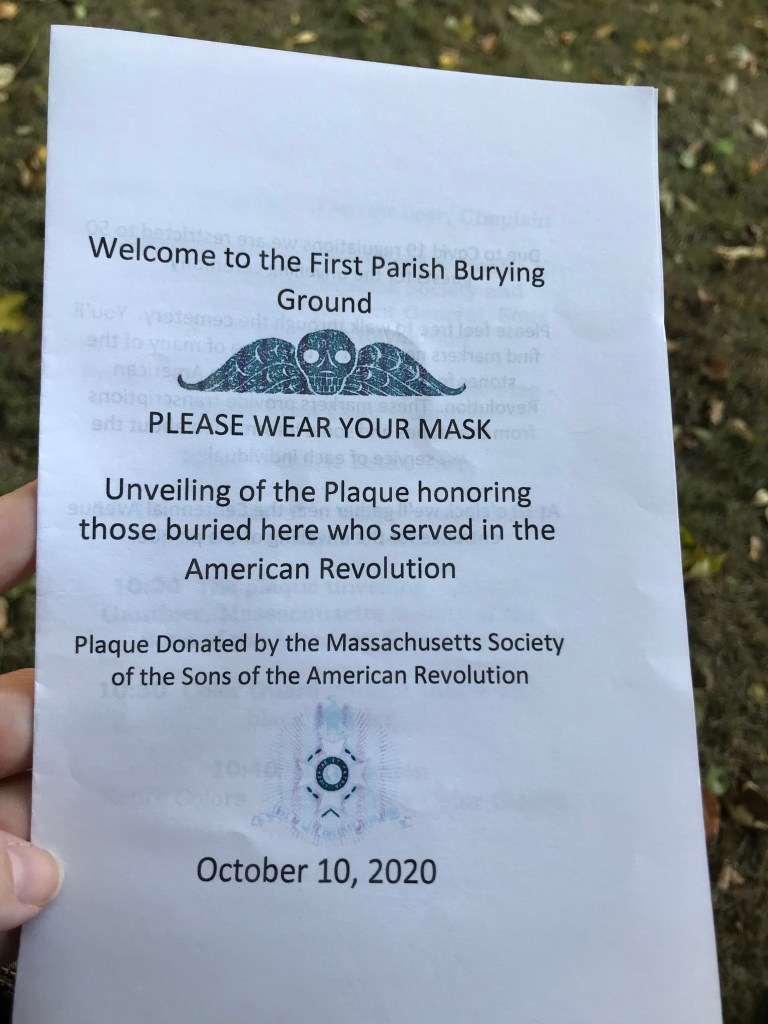
When I recorded the first episode, I touched on the establishment of the First Parish Church. The first meeting house, with sermons led by Richard Blynman, was in an area of downtown Gloucester called Beacon Hill. According to Pringle’s History of Gloucester, published in 1892, “A meeting house was erected as early as 1633. …This was a small log structure. Hard by a half acre of the field in that vicinity in 1644, was reserved for a burial ground, and here all that was mortal of the early settlers was laid to rest. This spot is, without doubt, the site of what is the Bridge street burial ground.” Bridge street is not currently a street in Gloucester, so I visited the Essex County Registry of Deeds website to clarify. Bridge Street in the 1890’s was what Centennial Avenue is now, and “Ye Oldest Burial Place,” as it is marked, is now called the First Parish Burial Ground. Before Bridge Street, it was named “Burial Ground Lane.” I am sure it was named Bridge Street after the Boston and Maine railroad bridge was constructed nearby.

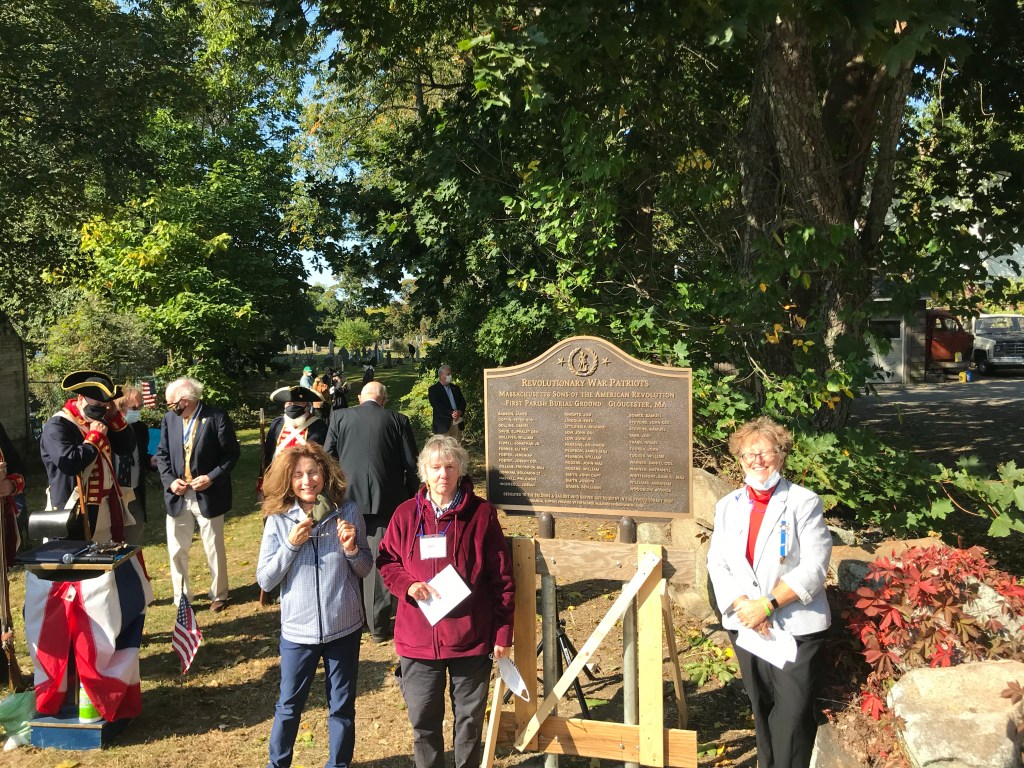
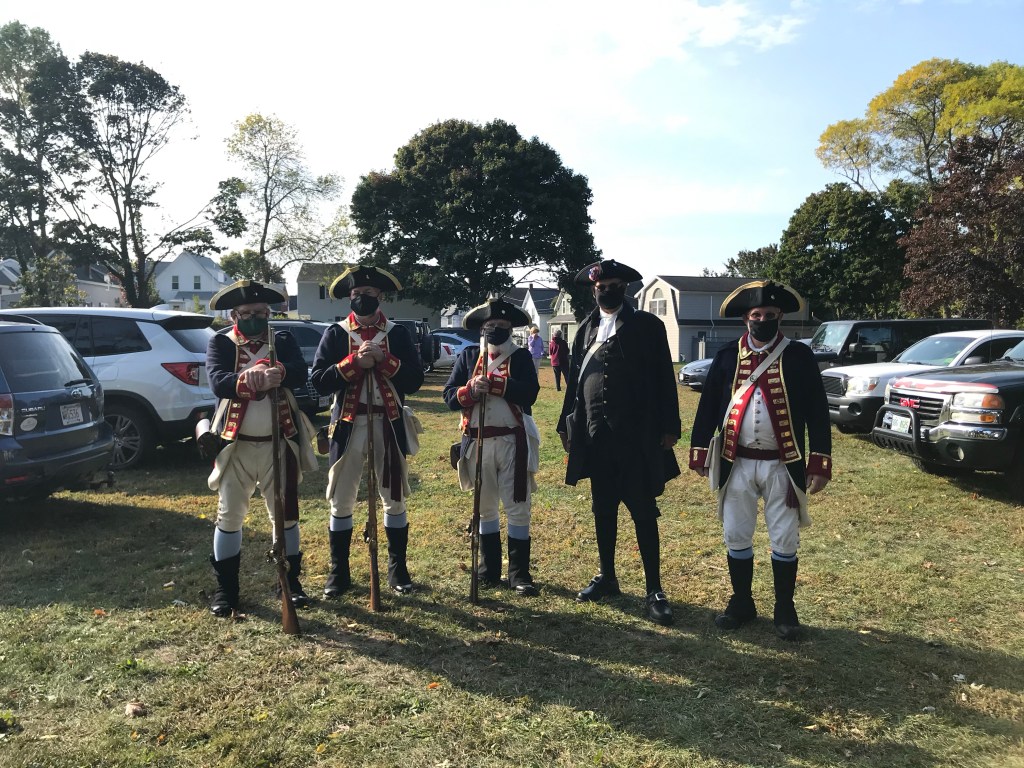
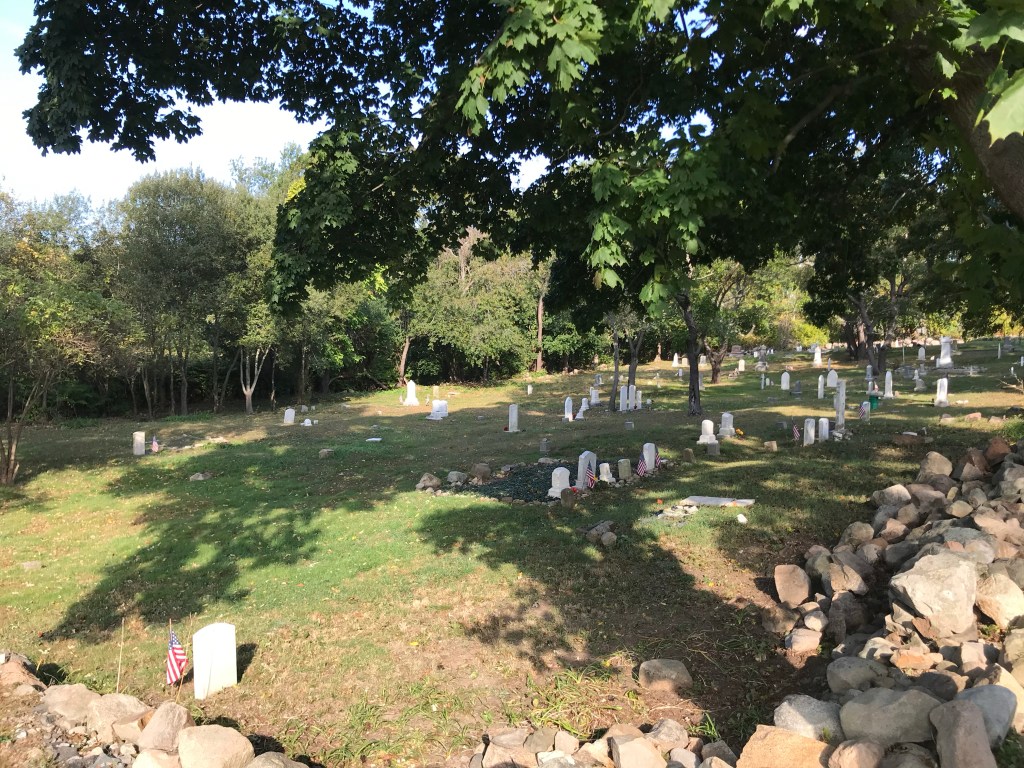
The volunteers of the City of Gloucester Cemetery Advisory Committee and the Clark family have taken on the immense task of restoring and maintaining First Parish Burial Ground and Clark’s Cemetery, the burial ground of Cape Ann Civil War veterans, many of whom are in the Clark family. Over the course of many years, they and many volunteers have advocated for this property’s preservation and have worked with the City of Gloucester to clear brush and litter, identify and restore gravestones, and allow the community to gain a deeper understanding of its heritage by honoring the dead. Below please enjoy these photos, and if you know of anyone I’ve missed, please get in touch with me: it was 2020…



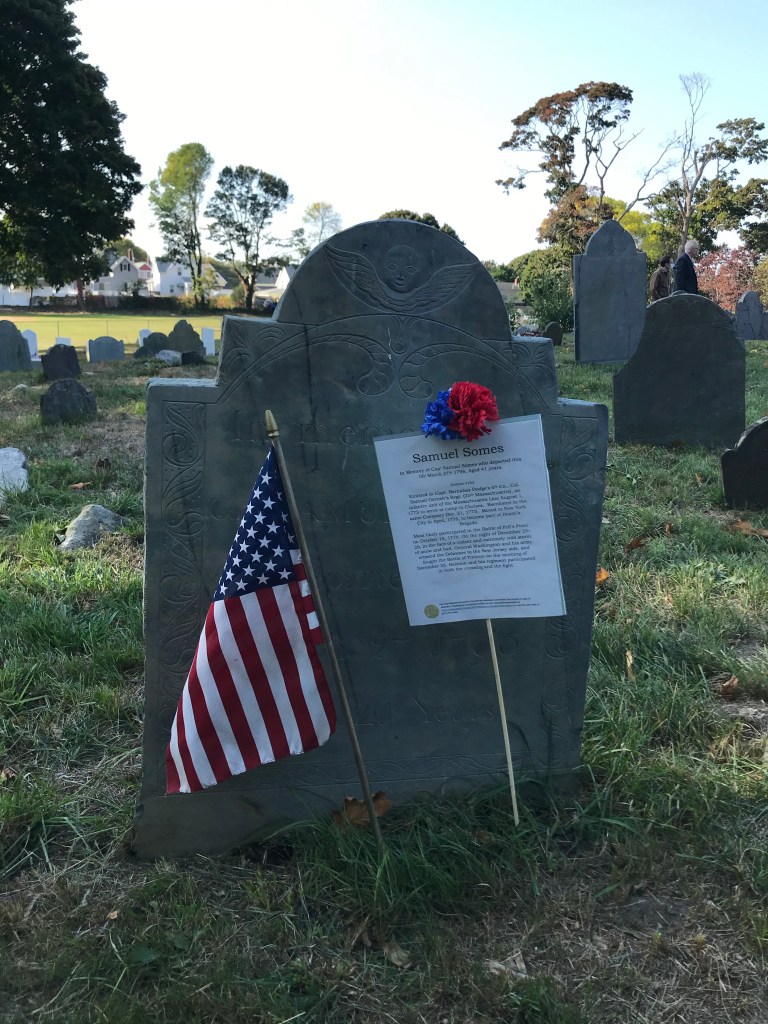
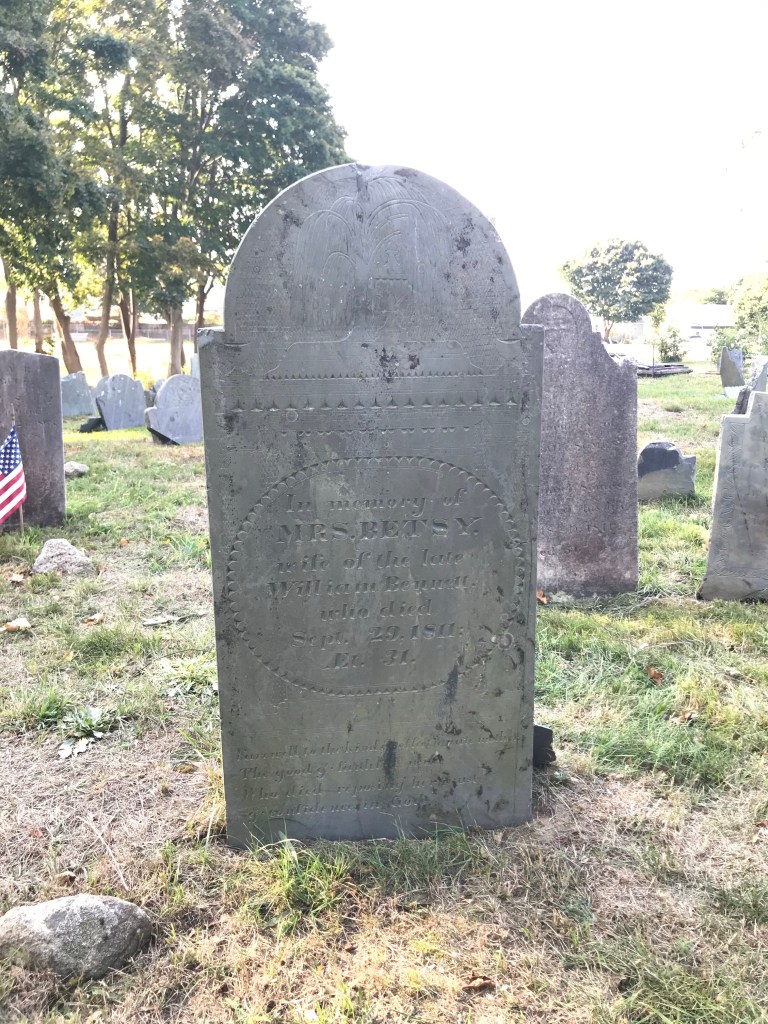
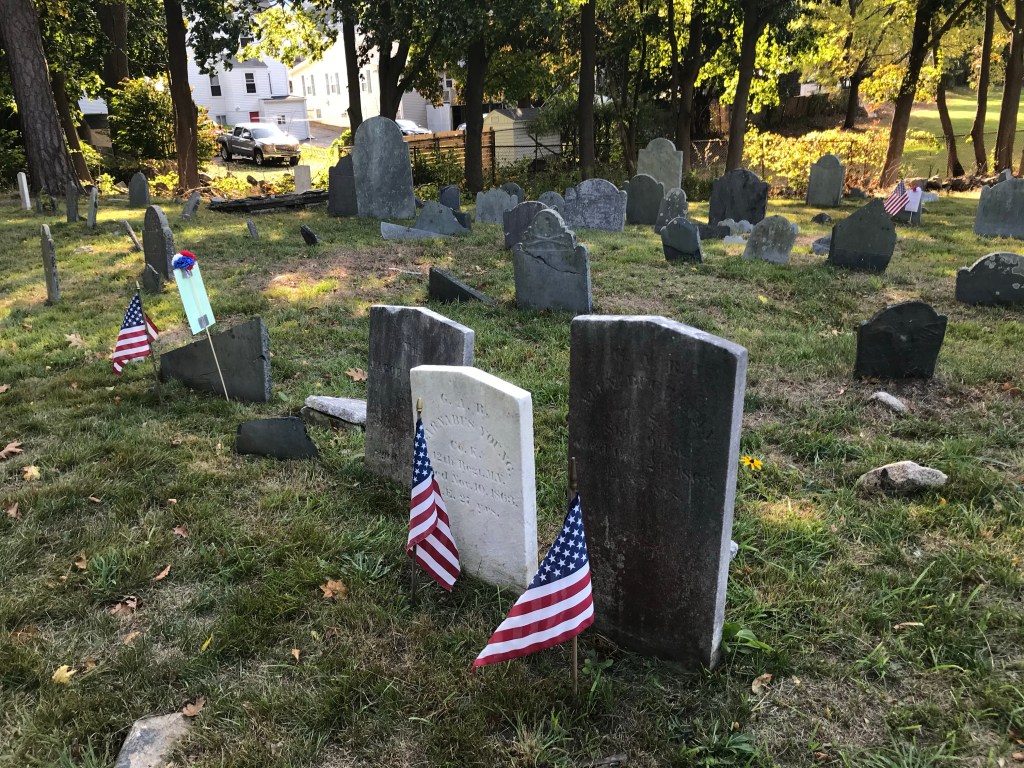
Again, I refer to Babson’s History of Gloucester.
“There is nothing in the town-records about the erection of the first Meeting-House; but these records show that the first settlers had a place of public worship, and they corroborate the tradition which points out the spot on which it was located.” The church property abutted Rev. Blynman’s personal property.
When the Reverend left Gloucester, its citizens were without an official minister until 1661. But they planned for one: ”The removal of Mr. Blynman to New London not only deprived the church here of its pastor, but weakened its ability to procure another to supply his place; for, as has been before stated, his departure was followed by that of a considerable portion of the settlers, who accompanied him thither. It does not appear that any measures were immediately taken by the town to settle a minister, but religious worship was not neglected.”
Babson goes further to say In the interim, for a few years, a former ship captain named William Perkins led some of Gloucester’s townspeople in spiritual worship, though not state-sanctioned. Other men in town sought to lead Gloucester residents in informal religious study., including Thomas Millet and William Stevens whose mutual involvement as spiritual leaders led them to a legal battle which was fortunately settled. These interruptions may have been a little disruptive to residents’ religious studies and obligations, but all residents were expected, by law, to attend service, ideally at the only Meeting-House in town from 1644-1716. Stay tuned for more on what happens after 1716 in future episodes.
While all this was happening, Gloucester leaders set aside land further up the Annisquam River for a new minister, which makes sense – the second meeting-house was built on Meeting-House Green, roughly where Route 128’s Grant Circle Rotary (or roundabout, or traffic circle) is now. A committee was selected to wisely set aside fifty pounds a year for the salary of a minister or elder. The Town encouraged Rev. John Emerson from Ipswich to accept the job, managing to hire him as the minister in July of 1661. He was officially ordained on October 6, 1663. He lived a short distance away from the meeting house, up toward Dogtown on Fox Hill, and died in 1700.
This second meeting-house was still designated as the First Parish church, because parishes were state-sanctioned religious gathering areas as well as voting polls and municipal meeting houses. The town of Gloucester elected members of a Board of Selectmen until it became a City, at which point, a Mayor and City Council form of government was instituted. Also important to know: the town of Rockport was originally a part of Gloucester called Sandy Bay. It was incorporated as a town in 1840. More on that during another episode as well.
Hearkening back to the witch trials, Babson writes of Reverend Emerson, ”But one article from his pen is known to be extant – the account furnished by him, in a letter to Rev. Cotton Mather, of the strange and wonderful occurrences here in 1692. If we call to mind the witchcraft delusion of that year, by which a neighboring town was made the theatre of the most awful tragedy ever enacted in New England, we shall indulge in no astonishment that Mr. Emerson ascribed the cause of the excitement here to diabolical energy.” A delusion possessed one family and then the entire town, and the town of Ipswich, that specters or ghosts were prowling around property and that the French and Indians were hiding in a nearby swamp intending to harm residents.
Indeed, Pringle writes, “The witchcraft delusion of 1692 extended to Gloucester but happily none of the accused were put to death…Six women of the town were imprisoned on the ground of being witches. Abigail Somes was one of the first accused and was confined in Boston nearly seven months being released Jan. 3, 1693, without trial. Ann Dolliver, wife of William Dolliver, and four other females were accused of witchcraft but fortunately returning reason of the people, prevented their execution. Rev. John Emerson, the clergyman of the town, wrote: “All rational persons will be satisfied that Gloucester was not harmed for a fortnight altogether by real French and Indians, but that the devil and his angels were the cause of all that befel the town.”
Gloucester’s part in King Philip’s War, which took place from 1675-1678, was small. King Philip’s War was a bloody tragedy essentially precipitated by years of colonists encroaching on indigenous land and laws making it illegal for Plymouth county colonists to have commerce with the Wampanoag tribe of southern New England. The war resulted in the Wampanoag tribe losing all of its lands and tribe members being slaughtered or sold into slavery. Several Gloucester men were granted lots of land at Kettle Cove in Magnolia for their military service. Other podcasts and books explore in more detail the tragedy of King Philip’s War. Although the part residents here played was considered small, overall, what happened was extremely significant and should not be pushed aside.
During the late 1600’s, the population of Gloucester remained fairly steady at about 650. Homes were small, but timber was in good supply, as were sawmills. According to Pringle, logging was actually a bigger industry than fishing during this time, though in 1680, there was a count of about 12 fishing vessels such as shallops and sloops. The cord-wood on Cape Ann was so popular that, in 1667, its sale and use had to be restricted so there was enough for every resident. The third meeting-house was built in May of 1700 at a cost of 253 pounds. It had a bell and pews and a tower. There was no jail at this time, but a public whipping post and stocks were built in downtown Gloucester and remained operational until about 1770. Although religion heavily influenced every part of life, until 1700, marriages were performed by local magistrates rather than ministers.
In 1700, Gloucester began its modern awakening. I am going to throw a lot of information at you here, but I will revisit each of these topics in different episodes, so please don’t worry – I will get to it!
Whereas prior to the turn of the century, Gloucester industry was focused a lot on logging and timber, to the point where regulations had to be put on harvesting wood to make sure families had 20 cords apiece, but not more, to last all year, in 1700, Gloucester’s fishing industry began to thrive. Exports didn’t just go to Salem: fish, timber, masts, and entire ships were sent to Europe and the West Indies. As the shipbuilding industry grew, so, too, did fishermen’s ability to expand their catches. In the 1700’s, fishing fleets sailed as far off as Cape Sable Island on the southeastern tip of Nova Scotia. Cape Sable Island is not to be confused with Sable Island, which is also off Nova Scotia but is almost twice as far away from Gloucester.
The third Meeting House was built on Meeting House Green. Some religious conflicts began to occur as the Puritans had to make room for Quakers, Unitarians, and Baptists. It was considered a sign of respectability to live in Dogtown, but more people began to settle closer to the harbors and coves. Many of Gloucester’s iconic antique homes were built in the 18th century and can still be seen today all over Gloucester and Rockport. Three-story gambrels are one of my favorite features of Gloucester’s Middle Street, which really began to come alive around this time as families established themselves with captains, or captains of industry, as their heads. One of the things about downtown Gloucester I find most interesting is Pine Street. It’s a one-way street off Washington Street and is sort of a back way to the Fire Department, the Sawyer Free Library, and City Hall. When you turn onto Pine, you’ll notice the houses on the left side are a good 100-200 years older than the houses on the right side. The reason? The houses on the left were farmhouses, and the houses on the right are sitting on what was once farm land.
Thinking about those big houses, I cannot help but be reminded that none of this would have been possible without Gloucester residents relying on slave labor. As in the rest of the United States, our entire economy and the reason we were able to advance to such levels of world domination was because we had free labor from African and indigenous slaves for hundreds of years. Fortunately, thanks to the hard work of some incredible Cape Ann residents, there is now light being shed on this entire issue – holistically, with accountability and compassion. The Cape Ann Slavery and Abolition organization, spearheading this important research, is comprised of Gloucester and Rockport residents and clergy members. They write, “The Cape Ann Slavery and Abolition website aims to reveal the hidden history of enslaved people, slaveowners, slave traders and sea captains, business owners involved in, or benefitting from, the slave trade on Cape Ann, and to tell their stories. Using contemporary research and primary sources, we present evidence-based information that has been overlooked, suppressed, or erased from local historical narratives.” I’m hoping to expand on this important topic, so very necessary to discuss, more in a future episode. In the meantime, please check out the Cape Ann Slavery and Abolition website at https://capeannslavery.org/ for more information. I’ll leave the link in the show notes.
And now it’s time for a segment I’m calling -at my daughter’s suggestion- Not-So-Clear Facts. I was going to call it “random trivia,” but she pointed out that sometimes, the information we have seems a little odd or downright unclear. That’s why I love it here.
1649: fine for cutting unrecorded timber was 15 shillings per tree.
In 1805, the town voted that swine do not go at large the current year. That law is still on the books, although it grew to include horses, cows, goats, or other grazing animals.
Also in 1805, Old Parish remained prey to wandering zealots.
In 1831, there was a thirty-hour snowstorm.
1896: sloop fouled after going through canal.
1968: First annual great schooner race
1969: City Hall clock tower got knocked out by lightning
If you feel so moved, please head over to my Patreon page: www.patreon.com/bgw. There you’ll find special perks for monthly supporters including merch. If you aren’t able to sign up for a Patreon at this time but would like to support BGW, please tell your family and friends about us, and if you can, leave a positive review in your podcast app. Positive reviews boost visibility for BGW, or any other podcast you listen to, and us creators really appreciate it because it helps us bring you more content.
Thank you for listening, and thank you for your support.
Books:
History of the Town of Gloucester, Cape Ann, including the Town of Rockport: John J. Babson, c. 1860; republished 1972.
History of the Town and City of Gloucester, Cape Ann, Massachusetts, by James R. Pringle, c. 1892
Gloucester, Massachusetts Historical Timeline: 1000 – 1999, compiled by Mary Ray, edited by Sarah V. Dunlap, assisted by Gloucester Archives Committee: Priscilla Anderson, Ann Banks, Stephanie Buck, Kathleen Cafasso, Lois Hamilton, Priscilla Kippen-Smith, Myron Markel, John Quinn, Alan Ray, Elaine Smogard, Janie Walsh, Natalie Whitmarsh. c. 2002, Mary Ray.
Websites:
https://fitzhenrylaneonline.org/historical_material/?type=Gloucester+Buildings+%26+Businesses§ion=Universalist+Church+%28Middle+and+Church+Streets%29 – Unitarian meeting house
https://fitzhenrylaneonline.org/historical_material/?type=Gloucester+Buildings+%26+Businesses§ion=Old+First+Parish+%2F+Subsequent+Fourth+Parish+Church+%28at+the+Green%29 – old first parish church
 Business in Great Waters